Consumer Unit (Fuse Box) Upgrades: Signs You Need One, Regulations and What to Expect
By the Golbik GBS team · Blog
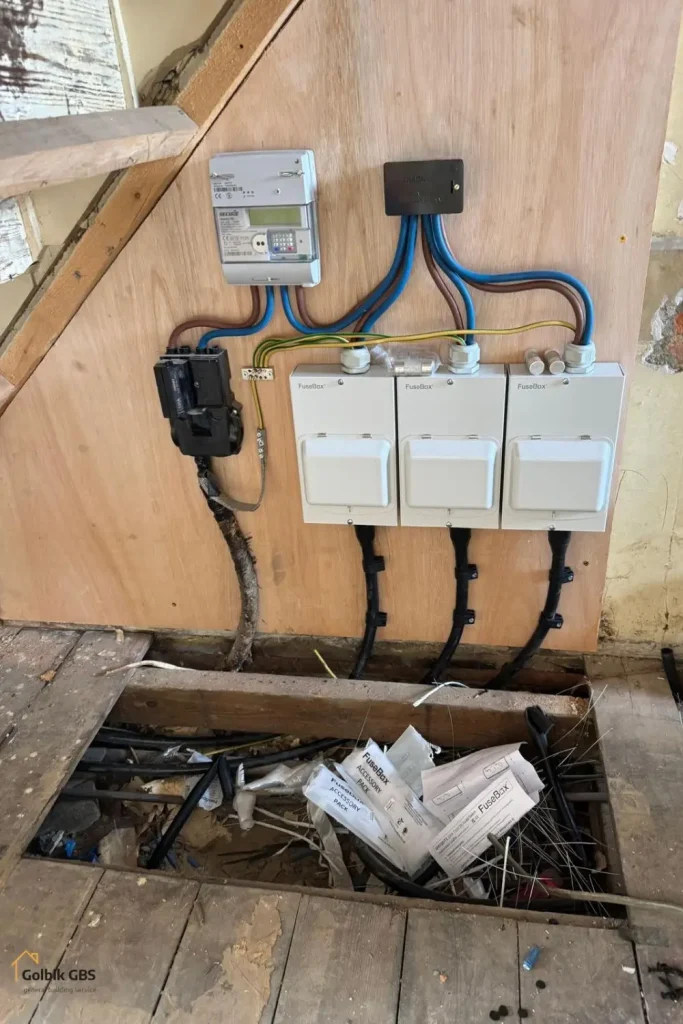
The consumer unit, often still called the fuse box, is the heart of a home’s electrical installation. Many London homes still have boards that were fitted long before modern safety devices became standard. This guide explains when an upgrade makes sense, what the regulations require and what happens on the day. For the wider picture, see our guide to rewiring and EICR checks.
Key takeaways
- Old fuse boxes with rewireable fuses or no RCD protection are the most common reason to upgrade.
- Since 2016, consumer units in homes must have a non-combustible enclosure, usually metal.
- A new consumer unit is notifiable work and must be tested and certified by a registered electrician.
- Faults found on existing circuits must be fixed before they are connected to the new board.
- The power is usually off for part of a day while the work is carried out.
Signs Your Fuse Box Needs Upgrading
- Rewireable or cartridge fuses instead of circuit breakers.
- No RCD protection, so there is nothing to cut the power quickly in an earth fault.
- A plastic or wooden enclosure rather than a non-combustible one.
- Frequent tripping, warm or discoloured parts, or a burning smell.
- No spare ways for new circuits for an extension, loft, kitchen or car charger.
- An unsatisfactory EICR with the board recorded as C1 or C2.
What a Modern Consumer Unit Includes
| Feature | What it does |
|---|---|
| Non-combustible enclosure | Contains a fire if a fault occurs inside the board; required in homes since 2016 |
| RCD or RCBO protection | Disconnects the circuit quickly if current leaks to earth, protecting against shock |
| Circuit breakers (MCBs) | Protect each circuit against overload and short circuit, and reset with a switch |
| Surge protection (SPD) | Limits damage from voltage spikes; generally required in new installations |
| Arc fault detection (AFDD) | Detects dangerous arcing; recommended in some situations |
Regulations and Certificates
All work is carried out to the current edition of the wiring regulations, BS 7671. Replacing a consumer unit is notifiable under Part P of the Building Regulations, so it must either be done by an electrician registered with a competent person scheme, who can self-certify it, or be inspected by building control.
On completion you should receive an Electrical Installation Certificate and, via the scheme, a Building Regulations compliance certificate. Keep both with your property documents.
What Happens on the Day
- Testing the existing circuits – faults such as poor insulation or missing earths must be fixed before they can be connected to RCD protection, otherwise the new board will trip.
- Isolating the supply – the power is switched off at the main switch; if the main fuse itself needs work, the network operator is involved.
- Fitting the new board – the old unit is removed, the new one installed and circuits labelled clearly.
- Testing and certification – every circuit is tested and the results recorded on the certificate.
Upgrading as Part of a Bigger Project
If you are planning an extension, a loft conversion or a full refurbishment, it is usually best to upgrade the consumer unit as part of that work, when new circuits are being added anyway. Homeowners near our base can also see our Wallington and Carshalton area guide.
Frequently Asked Questions
How do I know if my consumer unit needs replacing?
Common signs are rewireable or cartridge fuses, no RCD protection, a plastic or wooden board, frequent tripping, scorch marks, or an EICR that records the board as unsatisfactory. Adding new circuits, such as for an extension or an electric car charger, can also mean the board needs upgrading.
Is a consumer unit replacement notifiable under Building Regulations?
Yes. Replacing a consumer unit is notifiable work. A registered electrician can self-certify it and issue an Electrical Installation Certificate, and the work is registered with building control.
Will the power be off all day?
The supply is switched off while the old board is removed and the new one connected and tested, which usually takes part of a working day. Plan for no power for several hours.
What if the main fuse also needs changing?
The main fuse and cut-out before the meter belong to the network operator, which is UK Power Networks in most of London. If they need replacing or the supply needs isolating at that point, the network operator must be involved.
Need a Consumer Unit Upgrade?
Golbik GBS replaces consumer units, rewires homes and carries out electrical upgrades across London, with work tested and certified. See our domestic electrical services, our electricians in Mitcham, or contact us.
Related Guides
- Full House Refurbishment in London: Stages, Permissions and Timeline
- Loft Conversion Types for London Homes
- Side-Return, Rear or Wraparound Extension?
- Planning a Kitchen Renovation in a London Home
- Bathroom Renovation in London: Wet Rooms, Waterproofing and Safety Zones
- Does Your London Home Need Rewiring?
- Upgrading Heating and Plumbing in an Older London Home
- Party Wall Agreements in London: A Homeowner’s Guide
- Do You Need Planning Permission? Rules by London Borough
- Extending a 1930s Semi in Sutton, Wallington and Mitcham
- Renovating a Victorian Terrace in South West London
- How to Choose a Builder in London