Does Your London Home Need Rewiring? Warning Signs, EICR Checks and What to Expect
By the Golbik GBS team · Blog
Many London homes still run on wiring installed decades ago, long before kitchens full of appliances, home offices and electric car chargers. Ageing wiring is not always obvious, but it can be a fire and shock risk. This guide explains the warning signs, how an inspection works and what to expect if your home needs rewiring or electrical upgrades.
Key takeaways
- Old cable types, a fuse box with rewireable fuses and no RCD protection are common signs a home needs attention.
- An Electrical Installation Condition Report (EICR) is the professional way to assess an existing installation.
- Owner-occupiers are advised to have an EICR at least every 10 years; private landlords in England need one every 5 years.
- Rewiring is easiest during a refurbishment, when floors and walls are already open.
- New circuits and rewires are notifiable work and should come with an Electrical Installation Certificate.
Warning Signs Your Wiring Needs Attention
- Old cable types: rubber, lead-sheathed or fabric-covered cables, typically found in installations from before the 1970s.
- An old fuse box: rewireable fuses, a wooden back board or a mix of old and new parts.
- No RCD protection: modern installations protect circuits with residual current devices that cut the power in a fault.
- Physical signs: scorch marks, warm or buzzing sockets and switches, flickering lights, a burning smell.
- Frequent tripping or fuses blowing.
- Too few sockets and heavy reliance on extension leads.
What Is an EICR?
An Electrical Installation Condition Report is a detailed inspection and test of an existing installation, carried out by a qualified electrician. It checks wiring, earthing and bonding, protective devices, sockets and fittings, and records any defects with a classification code:
| Code | Meaning | What to do |
|---|---|---|
| C1 | Danger present | Immediate action required |
| C2 | Potentially dangerous | Urgent remedial work required |
| C3 | Improvement recommended | Not dangerous, but worth upgrading |
| FI | Further investigation required | Investigate without delay |
For owner-occupied homes, an EICR is recommended at least every 10 years and when buying a property. Private landlords in England must have one at least every 5 years and provide a copy to tenants.
Partial or Full Rewire?
Consumer unit upgrade
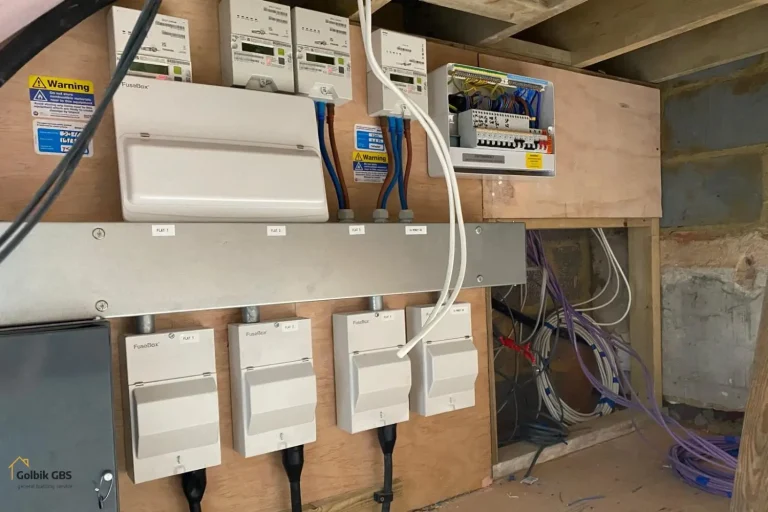
If the wiring itself is sound but the fuse box is outdated, replacing it with a modern consumer unit with RCD protection can be enough. Since 2016, consumer units in homes must be made of non-combustible material, typically metal.
Partial rewire
Individual circuits, such as the kitchen or an extension, can be renewed while the rest of the installation is kept, provided the existing wiring tests satisfactorily.
Full rewire
Where cables are old or the installation is unsafe, a full rewire replaces all cables, accessories and the consumer unit. It is most efficient during a full refurbishment, when floors and walls are open and plastering follows anyway.
What Happens During a Rewire
- Planning: agree positions for sockets, switches, lighting, data points and appliances.
- First fix: floorboards lifted and walls chased to run new cables to every point.
- Making good: walls and ceilings plastered, floors relaid.
- Second fix: sockets, switches, lights and the consumer unit connected.
- Testing and certification: the installation is tested and an Electrical Installation Certificate issued, with the work notified under Building Regulations.
If you are also planning a new kitchen, bathroom, extension or loft conversion, plan the electrics as part of that project rather than separately.
Rewiring Period Homes in London
Victorian and Edwardian houses often have suspended timber floors, which make running new cables easier, but also original plaster and features that need careful handling. Converted flats can have shared or confusing supplies that need tracing before work starts.
We carry out electrical work across London, including Clapham, Fulham, Chelsea, Hammersmith, Dulwich and Mitcham.
Frequently Asked Questions
How do I know if my house needs rewiring?
Warning signs include rubber, lead or fabric-covered cables, a fuse box with rewireable fuses, no RCD protection, scorch marks or warm sockets, frequently tripping circuits and too few sockets for modern use. An EICR carried out by a registered electrician will confirm the condition of the installation.
What do the codes on an EICR mean?
C1 means danger present and immediate action is required. C2 means potentially dangerous and urgent remedial action is required. C3 means improvement recommended. FI means further investigation is needed. A report with any C1, C2 or FI codes is classed as unsatisfactory.
How often should an EICR be done?
For owner-occupied homes, an inspection at least every 10 years is recommended, and when buying a property. Private landlords in England are legally required to have the installation inspected at least every 5 years.
How long does a full rewire take?
It depends on the size of the property and whether it is occupied. A typical house rewire takes from several days to a couple of weeks, followed by making good and decoration. Rewiring an empty property during a refurbishment is quicker and less disruptive.
Need an Electrician?
Golbik GBS carries out rewiring, consumer unit upgrades, lighting and electrical alterations across London, with work tested and certified. Visit our domestic electrical services page or contact us to arrange a visit.
Related Guides
- Full House Refurbishment in London: Stages, Permissions and Timeline
- Loft Conversion Types for London Homes
- Side-Return, Rear or Wraparound Extension?
- Planning a Kitchen Renovation in a London Home
- Bathroom Renovation in London: Wet Rooms, Waterproofing and Safety Zones
- Upgrading Heating and Plumbing in an Older London Home
- Party Wall Agreements in London: A Homeowner’s Guide
- Do You Need Planning Permission? Rules by London Borough
- Extending a 1930s Semi in Sutton, Wallington and Mitcham
- Consumer Unit (Fuse Box) Upgrades Explained
- Renovating a Victorian Terrace in South West London
- How to Choose a Builder in London